One Simple Dietary Change That Alleviated 90 Percent of My IBS Symptoms

For years I suffered from irritable bowel syndrome (IBS), an intestinal disorder that affects 10 to 15 percent of the world’s population. I experienced IBS with diarrhea (known as IBS-D), which resulted in frequent sprints to the bathroom, many agonizing hours on the toilet, and frantic car rides as I’d race home in pain — hoping and praying I’d make it in time.
Luckily, I always did make it home at just the right time. But that isn’t the case for all IBS-D sufferers. According to a random telephone survey conducted in 2002 by the International Foundation for Gastrointestinal Disorders (IFFGD), about one in three respondents with IBS-D admitted to losing control of their bowels at one time or another.
Other common symptoms of IBS-D include abdominal pain, gas, frequent stools, and nausea. Not to mention the shame and embarrassment of sneaking off to the restroom at parties, keeping friends and family waiting at restaurants and shopping malls, and bailing on plans at the last minute. When you have an irritable bowel, few things in life are certain.
I can truly sympathize with my fellow IBS sufferers. Imodium was quite honestly my best friend when my disorder was at its worst, but it constipated me and left me in pain for days. I’d even gotten to the point where I would take Imodium after a normal bowel movement, hoping it would keep loose stools at bay whenever I had work, class, or other plans. Sometimes it worked, but other times it just backed me up and made my stomach hurt.
To rule other gastrointestinal conditions, I had my first colonoscopy at 18, followed by tests for Helicobacter pylori (H. pylori), Escherichia coli (E. coli), Clostridium difficile (C. difficile), and celiac disease. I met with several gastroenterologists, submitted more stool samples than I can count, and read every book I could find on treating irritable bowel syndrome. I dreaded eating out at restaurants or with friends and family because I knew there would be hell to pay if I ate something bothersome. And since I had no idea what my trigger foods were at the time, it was impossible to avoid them.
I remember not eating anything except for a plain bagel on my wedding day — not because I was trying to squeeze into my bridal gown — but because I was deeply afraid of having stomach pains and diarrhea. And while working as a front desk receptionist during college, I’d snack on nothing but plain saltine crackers and rice cakes because they seemed to be the only “foods” that didn’t upset my stomach.
When I wasn’t at work or in class, I was eating the Standard American Diet — having no clue that things like meat, cheese, ice cream, and candy were triggering my irritable bowel. I was making Campbell’s Soup recipes and eating frozen cheese pizzas and pepperoni Hot Pockets. My favorite beverages at the time included sugary drinks like Diet Coke with Lime and just about every flavor of Vitaminwater. But whenever I’d see my gastroenterologists or primary care doctors, they never suggested changing my diet. In fact, they never mentioned diet at all.
How I Accidentally Treated My Irritable Bowel
Despite how common the disorder is — especially among women — irritable bowel syndrome remains a taboo and socially stigmatized subject. Certain elimination diets such as the low FODMAP diet have been proven to alleviate IBS symptoms and improve quality of life, but there is currently no known cure for the intestinal disorder.
According to a 2016 review published in Clinical and Experimental Gastroenterology, a low FODMAP diet (a diet low in fermentable oligosaccharides, disaccharides, monosaccharides, and polyols) alleviates gastrointestinal symptoms in about 86 percent of IBS patients. But for some, the solution could still be as simple as eliminating dairy products. At least this is what worked best for me.
Lactose-containing dairy products are one type of disaccharide found in everything from butter and margarine to milks, cheeses, yogurts, and ice creams. But fortunately, safe milk alternatives are available — including plant-based products made from almonds, oats, rice, cashews, macadamia nuts, hemp, and quinoa. Alternative milks containing soy protein isolate (rather than whole soybeans) or coconuts are not recommended for those following the low FODMAP diet.
It wasn’t until a coworker introduced me to veganism that I intentionally eliminated dairy from my diet and accidentally reduced the worst of my IBS symptoms. To say I was relieved would be an understatement! I slowly replaced dairy products with non-dairy substitutes and eventually experienced less and less abdominal pain and diarrhea. Who knew a minor dietary change could make such a big difference?
And while eliminating dairy from my life wasn’t the easiest of tasks, the physical health benefits were well worth all the hard work I put into changing my diet. For the first time in years, I could finally enjoy food without having to worry about finding the nearest bathroom, canceling plans at the last minute, or “getting sick” while out in public.
I’ll always be so grateful for the coworker who introduced me to dairy-free living. If not for her suggestions, I might still be with the millions of men and women suffering from the wrath of IBS-D. I still keep Imodium in my purse at all times — even though I haven’t taken it in years — but I’m happy to report that I’m mostly symptom-free after nearly a decade of saying goodbye to dairy.
I do occasionally experience diarrhea, bloating, and abdominal pain to this day, but typically during or around my period, or when I’m experiencing heavy levels of stress. Or after drinking a large glass of fresh celery juice (I’m not sure I’ll make that mistake again).
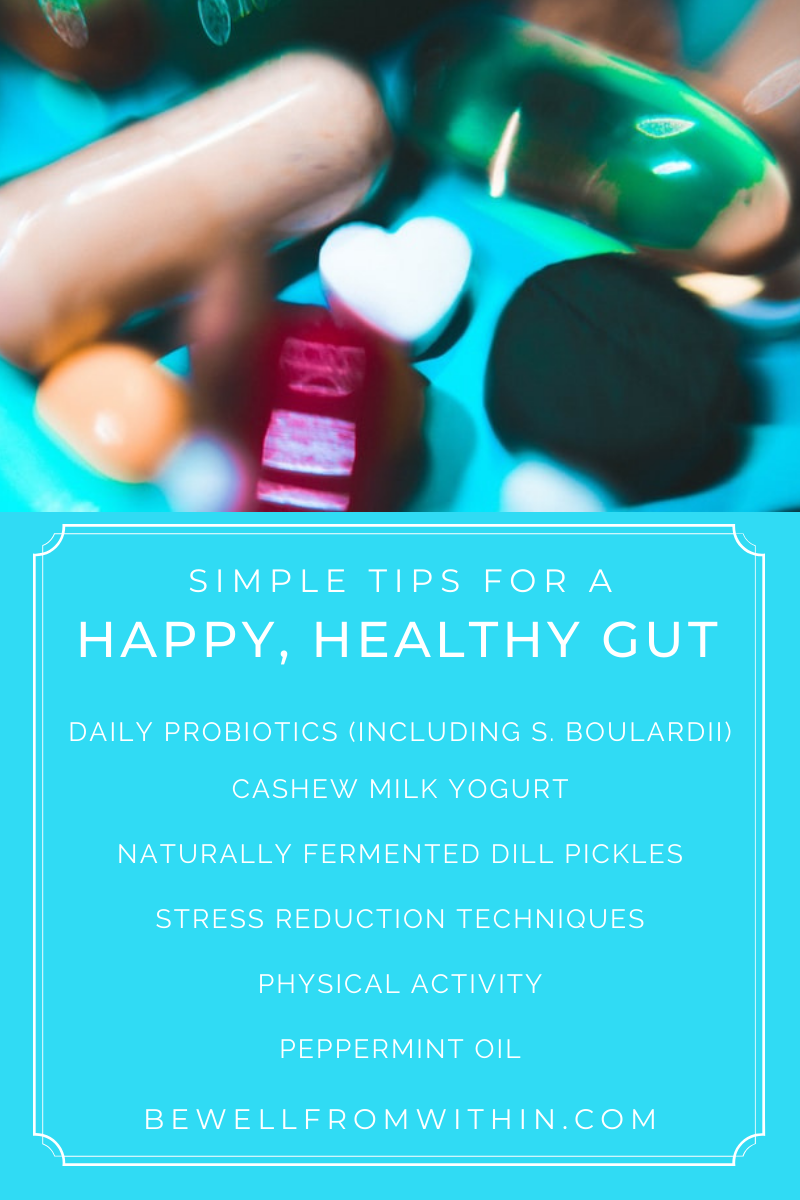
Tips for a Healthy, Happy Gut
To keep my gut healthy after so many years of digestive distress, I take a daily probiotic, consume lots of cashew milk yogurt, snack on naturally fermented dill pickles, and supplement with Saccharomyces boulardii (S. boulardii) several times throughout the day. According to a 2012 review published in Therapeutic Advances in Gastroenterology, S. boulardii is scientifically proven to prevent and treat gastrointestinal conditions such as irritable bowel syndrome, and improve the quality of life of IBS sufferers. However, immunocompromised patients and those with severe intestinal diseases should exercise caution when taking S. boulardii as a daily probiotic.
In addition to consuming probiotic-rich foods and removing dairy products from your diet, there are some other steps you can take to improve your IBS symptoms. Regular physical activity, peppermint oil, hypnosis, and stress reduction techniques are just a few potential remedies for IBS.
Moreover, it’s important to note that additional research is needed to understand the link between dairy products and IBS. A 2020 review article published in the Cureus Journal of Medical Science found no clear correlation between IBS and lactose intolerance, but a hydrogen breath test may be used as a tool to determine whether a lactose-free diet could be beneficial. If your other IBS treatments don’t seem to be working, a dairy-free diet is certainly worth trying.
Final Thoughts
While quitting dairy treated about 90 percent of my IBS-D symptoms, I know irritable bowel syndrome is something I’m always going to live with. But as long as I’m mostly symptom-free and have a healthy relationship with my toilet and the food I’m eating each day, I’m totally OK with that.
Sources:
- https://aboutibs.org/what-is-ibs/facts-about-ibs/statistics/
- https://aboutibs.org/signs-and-symptoms/ibs-with-diarrhea/
- https://www.ncbi.nlm.nih.gov/pmc/articles/PMC4918736/
- https://www.godairyfree.org/dairy-free-grocery-shopping-guide/dairy-ingredient-list-2
- https://www.ncbi.nlm.nih.gov/pmc/articles/PMC3296087/
- https://www.mayoclinic.org/diseases-conditions/irritable-bowel-syndrome/diagnosis-treatment/drc-20360064
- https://www.ncbi.nlm.nih.gov/pmc/articles/PMC7032600/
Well From Within offers freelance blogging services to health and wellness businesses. For more information, please check out my blogging services and rates, or take a moment to learn how blogging can benefit your health and wellness business.